
How a self-taught designer built a zero-waste fashion label without industry connections or formal training
Lithuanian born Dovile Riebschlager started sewing at thirteen with a single tool: an old sewing machine and a stack of fashion magazines. No mentors. No fashion school. No runways within reach of her hometown in a former Soviet republic.
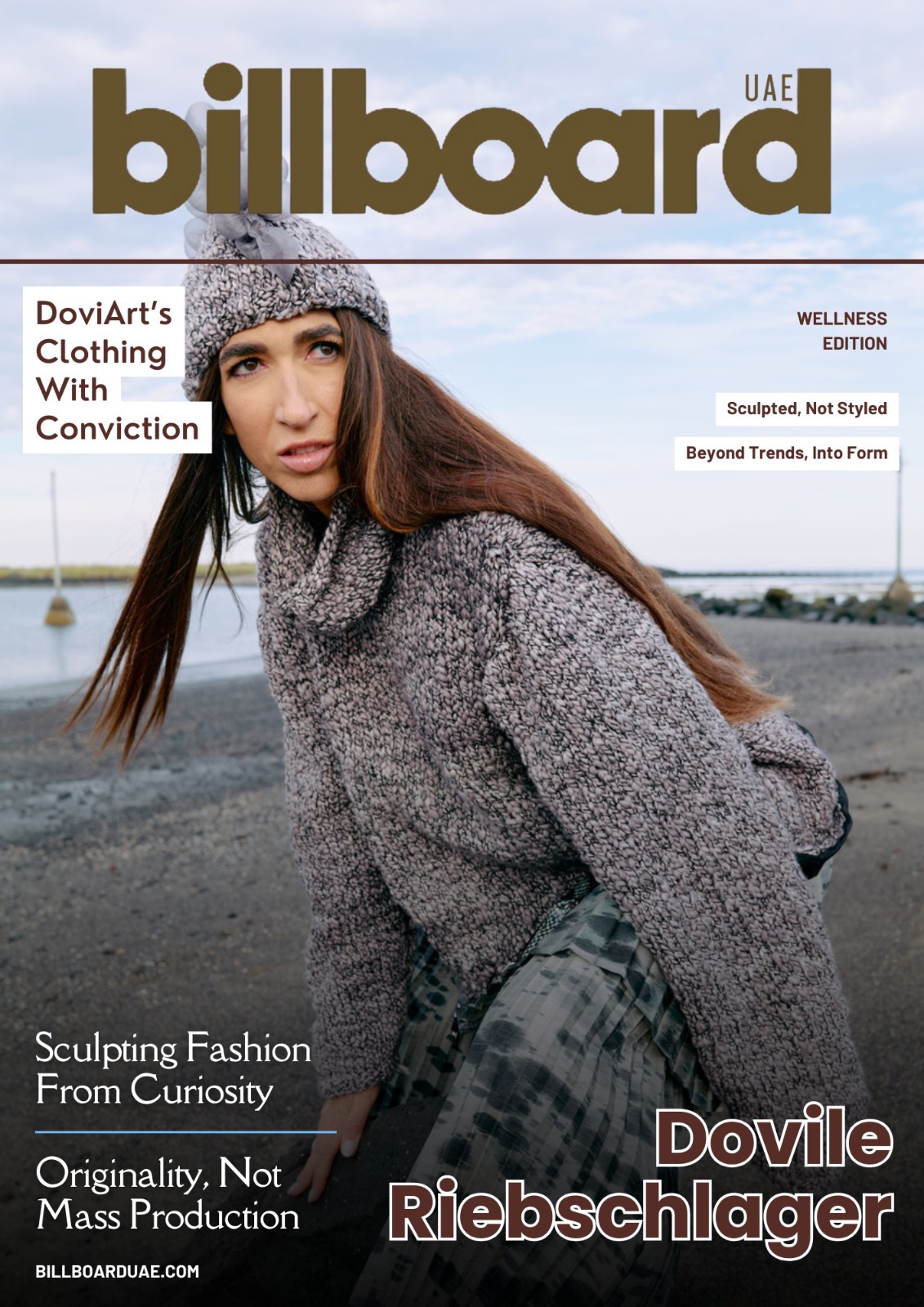
Two decades later, her label DoviArt Fashion has shown collections at fashion weeks across three continents—New York, Los Angeles, Miami, Moscow, New Delhi, and Reykjavik—known for sculptural silhouettes that challenge conventional garment construction.
The trajectory between those two points involved textile chemical engineering studies, single motherhood, immigration, and a relentless focus on waste reduction that now defines her production process.
From Chemical Engineering to Costume Design

Riebschlager’s first degree wasn’t in fashion—it was in chemical engineering. “There was no clear creative pathway,” she explains. Art felt unattainable. Engineering felt safe.
It didn’t last. She switched to art school, following what she describes as instinct rather than strategy.
Her entry into fashion came through a ballerina friend who needed a stage costume. That single commission expanded into work for an entire dance troupe, forcing her to learn quickly garment construction and beyond, later followed factory collaboration on a mass scale.
Building a Business as an Immigrant

In 1996, Riebschlager moved to Chicago and soon marriage fell apart and she was left to raise a toddler by herself. It took 2 decades to raise a child, establish herself, until in 2016 she launched her first U.S. collection. By 2020, she had formalized DoviArt Fashion LLC.
The business model is deliberately small-scale. Riebschlager designs and produces made-to-measure garments for international clients, often without in-person fittings. She manipulates fabrics before constructing garments—a time-intensive process that yields pieces with architectural volume and movement.
“I want to make clothes that actually fit—physically and emotionally,” she says.
The Zero-Waste Challenge
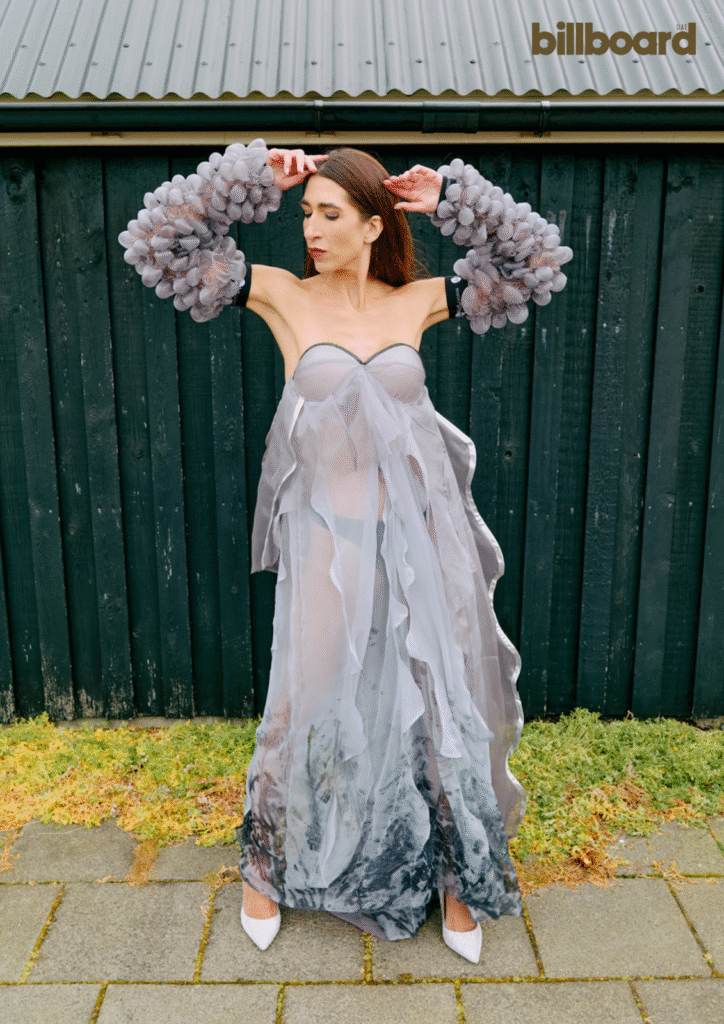
After collaborating with Trashion Revolution, a Triveni Institute Foundation, an organization focused on sustainable practices, Riebschlager redesigned her studio workflow to minimize textile waste. She calls it her most technically demanding project.
The approach puts her at odds with industry norms. Fast fashion relies on standardized sizing and mass production. Riebschlager’s model depends on custom measurements and limited runs—slower, more expensive, but with virtually no fabric waste.
She argues that fashion’s environmental problems and creative problems are connected. “Poor fit. Repetitive design. Mass production solves neither.”
What Success Looks Like
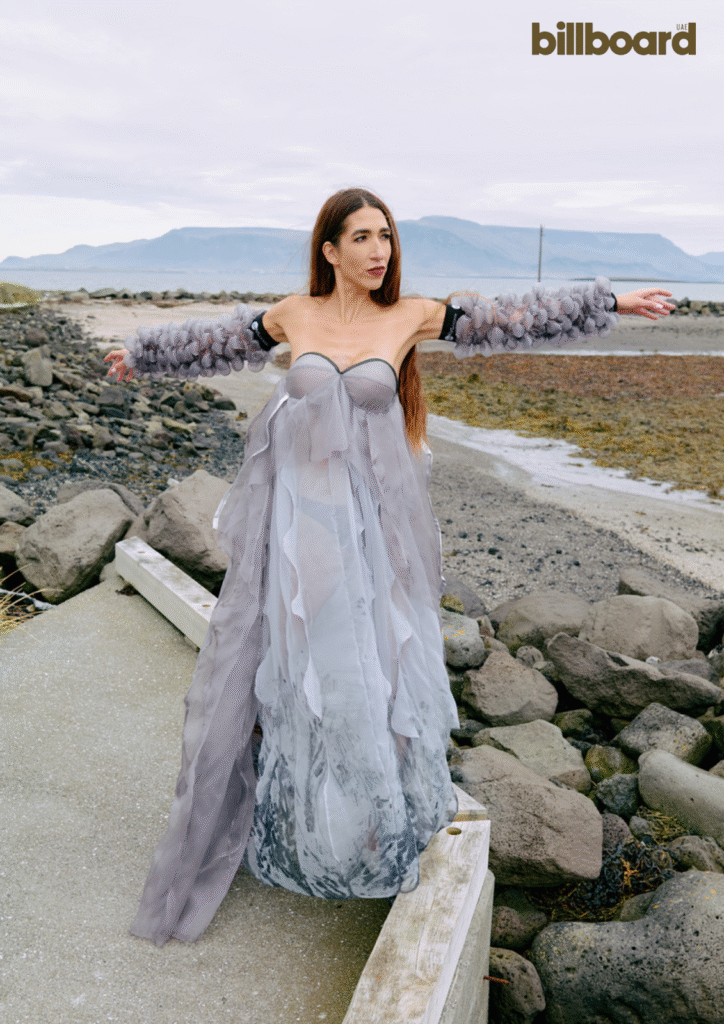
Riebschlager measures success differently than many designers. Not by press coverage or retail expansion, but by autonomy.
“For me, success is freedom,” she says. “Freedom to choose meaningful work. Freedom to support my family. Freedom to create without compromise.”
Her work has appeared at fashion weeks across multiple continents. She’s developing new fabric manipulation techniques for upcoming collections and exploring film costume design. Paris, Milan, and Berlin are on her schedule.
But the core impulse remains unchanged from her teenage years in Lithuania, when she sold paper-doll wardrobes cut from Burda magazines in exchange for cinnamon buns.
She’s still asking the same question: How does this work?
The difference now is scale. And an international audience watching for the answer.
Credits:
Photographer Marco Wolff IG @marcowolffphotography
Model and makeup Sara Lazarevic IG @sara.lazzaarr
Clothes and styling Dovilė Riebschlager IG @doviart.fasion