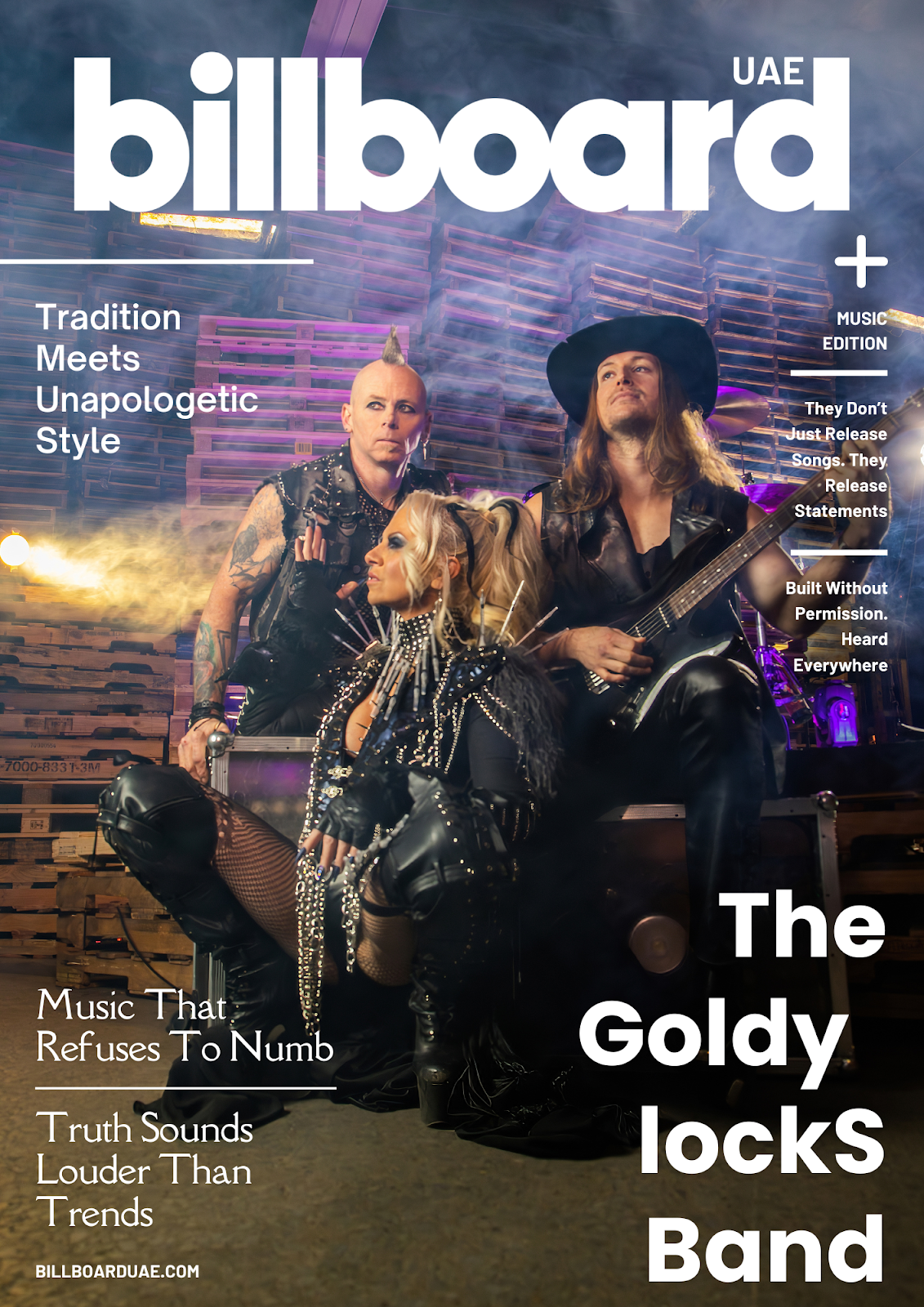

Plenty of bands release songs, The Goldy lockS Band releases statements.
With their latest single and video, “Never Again,” the band isn’t just unveiling new music. They’re opening the door to an entire world, hand-built, hand-worn, and hand-fought for, where sound, image, activism, and storytelling are inseparable. At the center of it all is drummer Rod Saylor, guitarist Johnny Oro, and lead singer Goldy Locks, an artist whose career has never followed a straight line, but has always followed a purpose.
“Never Again” didn’t begin in a pristine studio or a label boardroom. It was written backstage at a club in Louisville, Kentucky, captured in real time because the band’s drummer, Rod Saylor, never lets a moment disappear. He travels with full multitracking gear, turning liminal spaces into creative laboratories.
What started as a request for something “sexy and seductive,” inspired loosely by My Darkest Days’ Pornstar Dancer, the song quickly evolved once Goldy stepped into the lyrics. The seduction became symbolic. The desire turned dangerous. And the song revealed itself as a metaphor not only for substance addiction, but for any intoxicating cycle people struggle to escape, toxic relationships, soul-draining jobs, destructive friendships, familiar pain dressed up as comfort.
“We judge addiction and homelessness so easily,” Goldy explains, “without realizing how many of us are trapped in our own loops, just more socially acceptable ones.”
DIY as a Moral Position
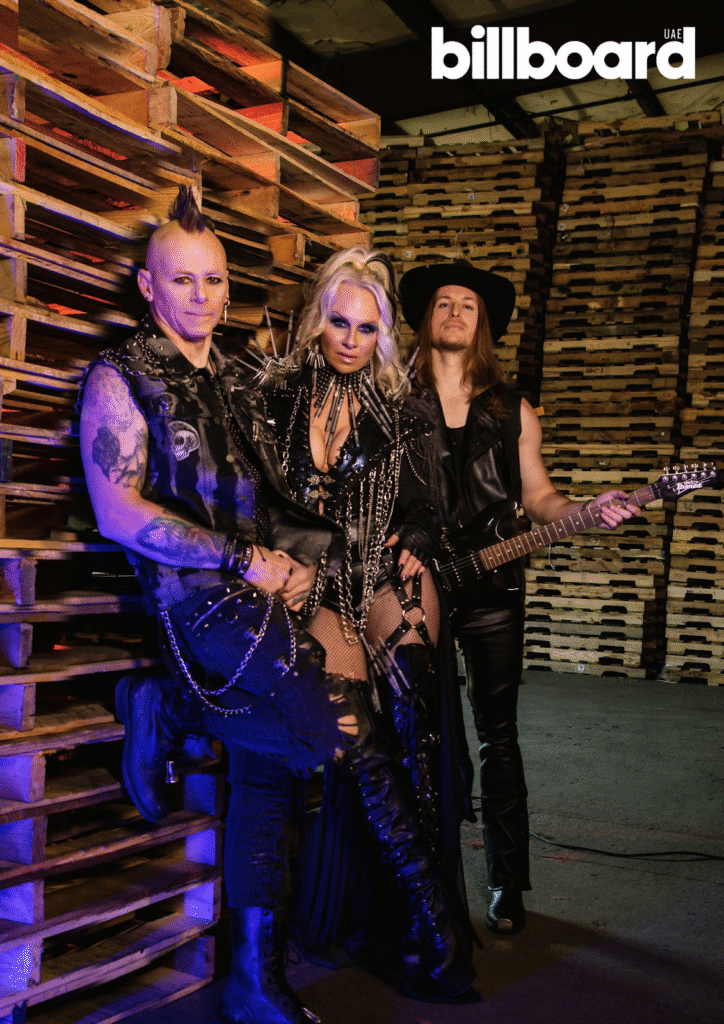
For The Goldy Locks Band, DIY isn’t an aesthetic, it’s an ethic.
Every piece of clothing seen in the “Never Again” video was made, modified, distressed, or rebuilt by the band itself. Nothing is styled for convenience. Everything is constructed for meaning.
Goldy’s own look began as a Hellraiser-inspired vision, until the physical reality of working with hypodermic needles forced a creative pivot. The result is a modern, sharply tailored tuxedo-style jacket built entirely from scratch, composed of hypodermic needles, faux fur, and scavenged chains. These elements aren’t shock props. They’re punctuation marks, visual metaphors for addiction’s quiet violence.
The horror references draw from Hellraiser and A Nightmare on Elm Street, because addiction, as Goldy frames it, is body horror when you’re living inside it.
Rod spent days distressing his own wardrobe by hand with help from girlfriend Elke, layering grime, paint, chains, and wear patterns until the clothing felt anxious and lived-in. Guitarist Johnny’s outfit was physically burned with a torch, leaving scorch marks that symbolize chaos, damage, and loss of control.
Transformation as Truth
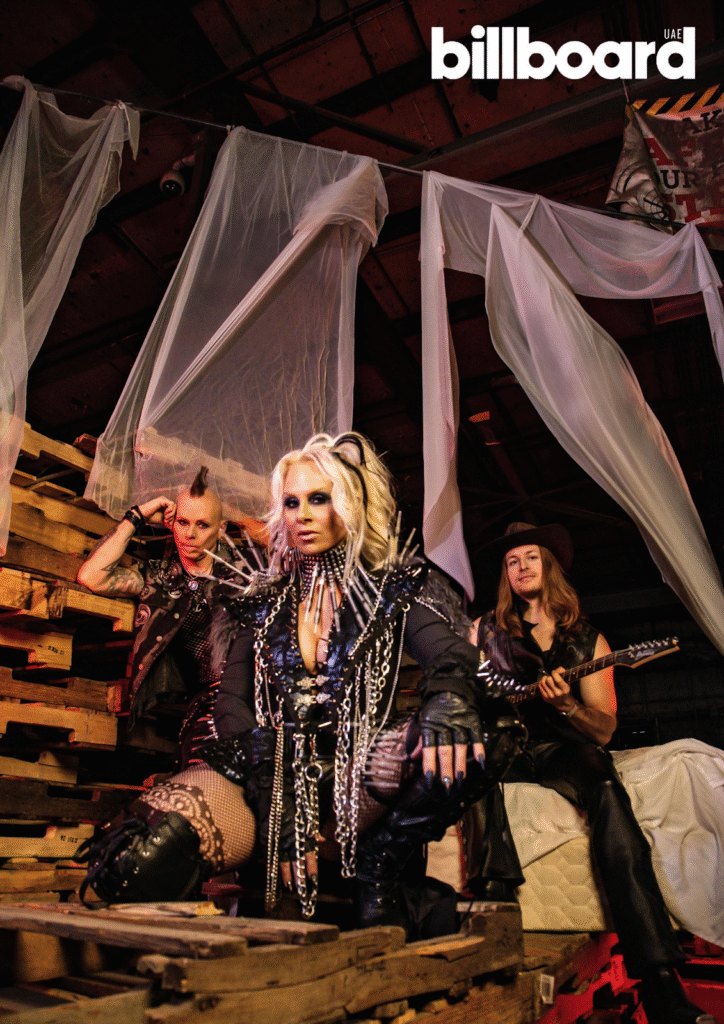
The visual narrative deepened through special effects makeup, designed to show the band deteriorating over time.
Originally attached to the project was SFX artist Mickey Heisler. When an unexpected foot injury sidelined her just before the shoot, she reached out to her classmate Bella Gordon, both graduates of Make-Up Designory in Burbank. Bella drove overnight, arriving at dawn to save the production.
Her work became central to the story. Over the course of the video, the band visibly ages and decays, progressively bruised, broken down, and eroded. It’s a physical manifestation of what addiction, of any kind, does to a person over time.
A Community-Built Production
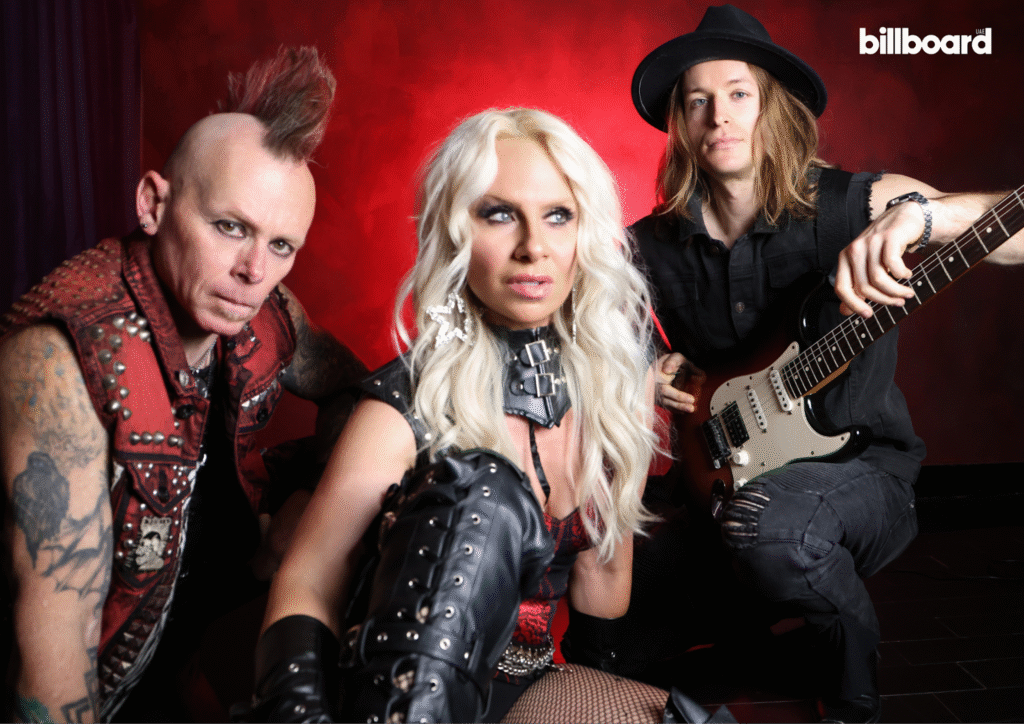
True to form, the project was surrounded by collaborators rather than hierarchy. Shooter/DP Paul Steward of 316 Productions, gaffer James Gibson, best boy Colin Nguyen, longtime BTS photographer Ron Maculuso, and actors Ben Oaks and Lisa Pezsarello all contributed their talents. The team was welcomed by the staff at Shorty’s Warehouse, whose generosity made the entire shoot possible.
Standing in that room, filled with artists supporting artists, sparked a sobering contrast. Not everyone has a community. Many slip into addiction, depression, or homelessness simply because they feel alone. Veterans return home carrying PTSD with no safe place to unload it. Trauma, untreated mental illness, and silence often pave the road to dependency.
Goldy puts it plainly:
“We are all just one moment or one instance away from being exactly like the people society casts aside.”
Sound That Refuses to Numb
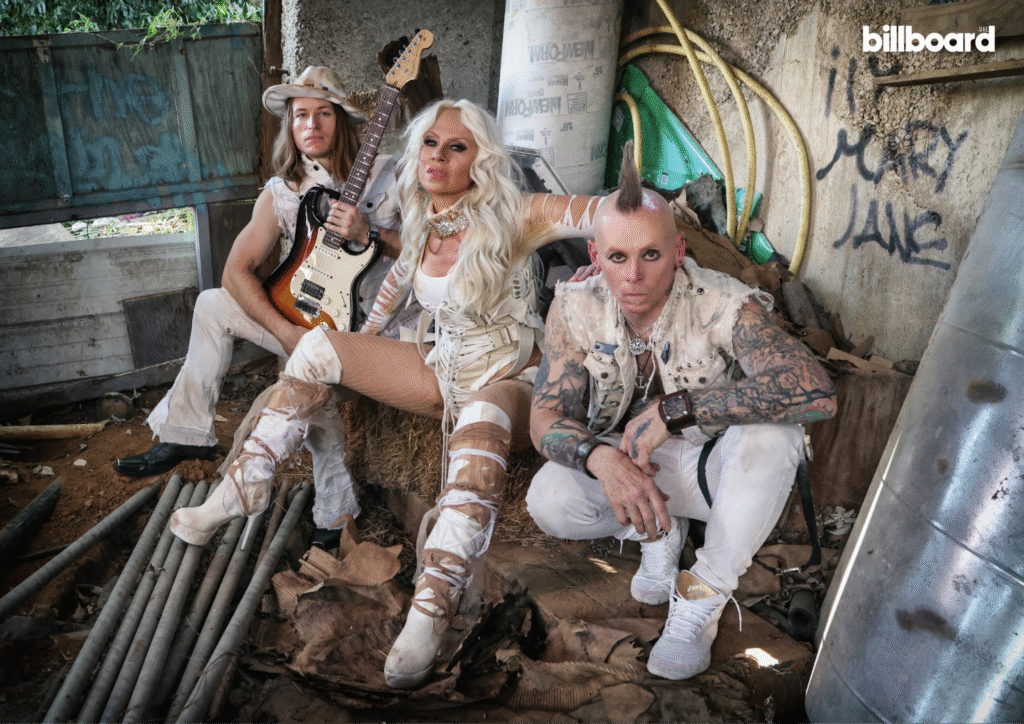
Musically, “Never Again” is built on tension. Johnny describes it as “a portrait, dark to light and back again,” opening with cinematic horror textures before dropping into crushing guitars. Rod’s drums don’t soothe, they provoke. Brutal snare hits and chest-punch kick drums are designed to feel like anxiety itself, forcing the listener into the discomfort rather than allowing distance.
The band is unapologetically theatrical, both on record and on stage. Fans aren’t just buying tickets, they’re stepping into a fully realized world.
That commitment has earned them stages alongside icons like Pink, Pat Benatar, 3 Doors Down, Nickelback, Bret Michaels, Maroon 5, Stevie Nicks, and Collective Soul, converting crowds night after night through sheer presence and performance.
Goldy, Before the Band
Long before The Goldy Locks Band, Goldy was already building worlds. She began sewing costumes for Prince while photographing his up-and-coming artists, learning early that music, image, and narrative are inseparable. That immersion led to her own record deal, followed by casting in the first-ever promotion of TNA IMPACT Wrestling.
She worked as a backstage interviewer, vocalist, and on-screen personality, wrote entrance music for WWE, ECW, WCW, and TNA wrestlers, and designed custom ring gear, an early bridge between performance, fashion, and storytelling.
Television followed, with appearances on TLC’s Cheapskates and Call In The Cheapskates, Running Wild with Ted Nugent, and eventually her own PBS home improvement series, Goldy Knows.
Activism Without Permission
The ethos behind “Never Again” extends far beyond the song.
Alongside its release, the band launched the viral campaign Buy The Record Not The Bod, exposing unfair streaming economics and urging fans to support artists through physical music, merch, and experiences, while artists are still alive.
From that same frustration, Goldy created Only Talent, an anti-OnlyFans movement challenging the idea that young women should monetize their bodies instead of developing their skills. The concept was born after a billionaire businessman casually suggested she “just open an OnlyFans.” Her response was radical defiance: bold, provocative promo visuals, nude but strategically covered by albums and CDs, delivering a clear message. Buy the record. Not the bod.
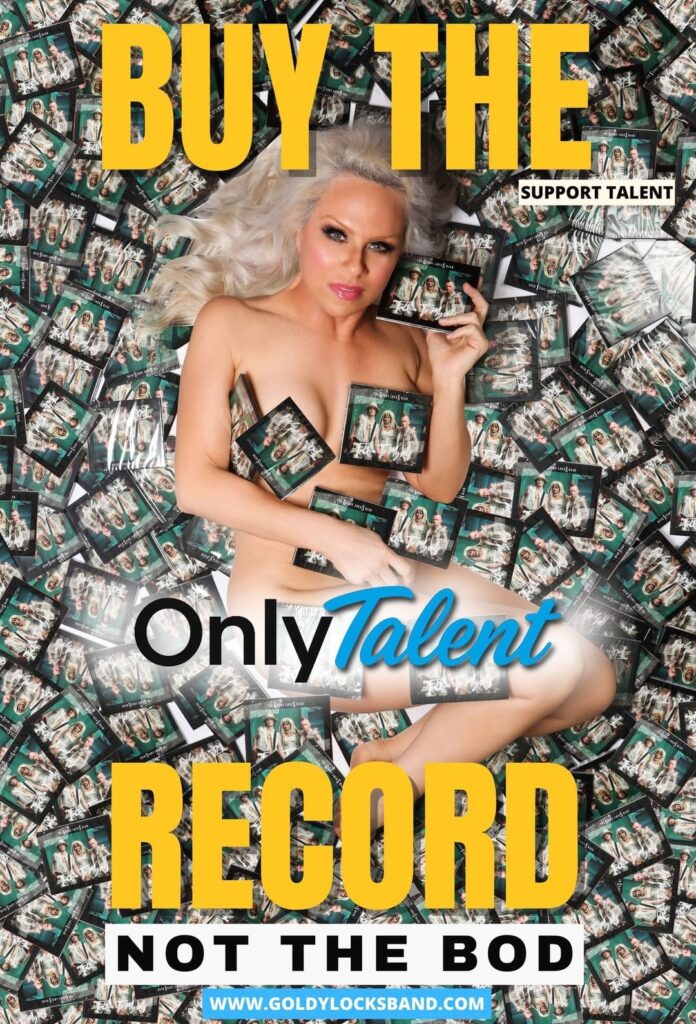
Rod joined with the sister initiative Buy The Record, Not The ROD, expanding the conversation to men and masculinity with satire, humor, and honesty.
The result? Over 400 national and international press features and cover stories, achieved entirely DIY, no major label, no corporate machine, no permission asked.
Lighting the Table on Fire
“Never Again” isn’t spectacle for spectacle’s sake. It’s uncomfortable. It’s honest. It lingers.
The Goldy Locks Band represents something increasingly rare: artists who build everything themselves, stand for something larger than a single release, and aren’t afraid to make people feel something real.
They don’t wait to be invited.
They built the table.
And then they light it on fire, on purpose.
Watch “Never Again”
https://youtu.be/qIduvDtuyfo
Explore the music & movement
www.GoldylockSBand.com